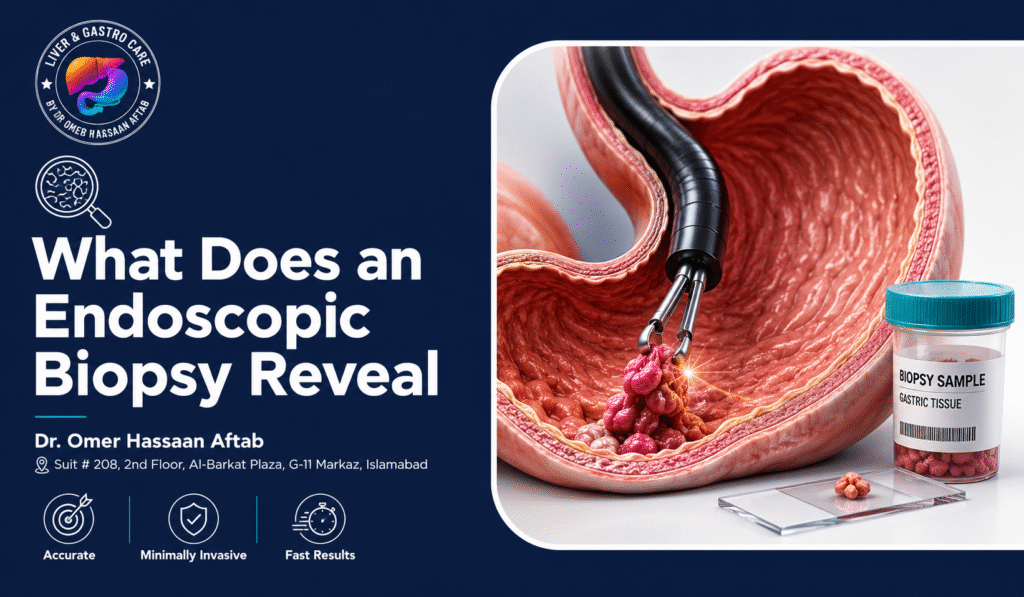
An endoscopic biopsy reveals whether tissue taken from the digestive tract is normal or abnormal. A pathologist studies the sample under a microscope and checks for infection inflammation ulcers precancerous cell changes and cancer. The findings help a gastroenterologist confirm a diagnosis and plan the right treatment instead of guessing based on symptoms alone.
Many patients feel anxious the moment a doctor mentions taking a tissue sample during an endoscopy. This guide explains the entire process in plain language. It covers what the procedure involves the conditions it detects how long results take and how to read a biopsy report once it arrives.
Table of Contents
- What Is an Endoscopic Biopsy
- How the Procedure Works
- What an Endoscopic Biopsy Can Reveal
- Common Conditions Detected by Biopsy
- How Long Do Biopsy Results Take
- Understanding Your Biopsy Report
- Risks and Aftercare
- When You Should Consider This Test
- FAQs
- Conclusion
What Is an Endoscopic Biopsy
An endoscopic biopsy is a tissue sampling procedure performed during an upper GI endoscopy or colonoscopy. A thin flexible tube fitted with a light and a tiny camera is guided through the mouth or rectum to reach the esophagus stomach duodenum or colon. Small forceps or a brush passed through the scope collect a piece of tissue. That sample then travels to a lab for microscopic examination.
Doctors rarely order this test as a first step. It usually follows persistent symptoms such as stomach pain unexplained weight loss difficulty swallowing chronic acid reflux or blood in the stool.
How the Procedure Works
Before the test a patient typically fasts for six to eight hours so the digestive tract is clear. Mild sedation keeps the patient relaxed during a standard upper GI endoscopy which usually lasts between fifteen and thirty minutes.
Tools Used for Tissue Sampling
- Forceps biopsy – the most common method used to grasp and remove a small piece of surface tissue
- Needle biopsy – used when a sample is needed from a deeper layer such as during an EUS guided procedure
- Brush cytology – gently collects surface cells for conditions like Barrett’s esophagus surveillance
Once the endoscope is removed the patient rests until the sedation wears off. Most people go home the same day.
What an Endoscopic Biopsy Can Reveal
The pathology report typically falls into one of these categories.
Infections
The test can confirm bacterial viral or fungal infections. The most frequent finding is Helicobacter pylori a bacterium strongly linked to stomach ulcers and chronic gastritis. Confirmed cases usually move straight into H. pylori treatment to clear the infection and prevent recurring ulcers.
Inflammation and Chronic Disease
Tissue changes consistent with gastritis colitis or inflammatory bowel disease often show up clearly under the microscope even when imaging scans look normal.
Celiac Disease
A duodenal biopsy checks for villous atrophy the hallmark sign of celiac disease. This remains the gold standard confirmation test alongside blood work.
Ulcers
Biopsy tissue from the edge of a peptic ulcer helps rule out malignancy while also confirming H. pylori as the underlying cause.
Polyps and Precancerous Changes
Growths found in the stomach or colon are sampled to determine whether they are benign hyperplastic or adenomatous. Adenomatous polyps carry a higher risk of turning cancerous over time which is why many are removed during polyp removal at the same visit.
Barrett’s Esophagus
Long standing acid reflux can change the esophageal lining. Biopsy identifies Barrett’s esophagus early so this precancerous condition can be monitored closely.
Cancer Detection and Staging
If cells look abnormal the pathologist checks for malignancy. A positive result also helps determine tumor type and grade which guides the treatment plan. This is one reason routine colorectal cancer screening is recommended for patients over fifty or those with a family history of the disease.
Common Conditions Detected by Biopsy
| Condition | What the Biopsy Shows | Typical Symptoms |
|---|---|---|
| H. pylori infection | Bacteria present in stomach lining | Bloating burning pain nausea |
| Gastritis | Inflamed stomach lining | Indigestion loss of appetite |
| Celiac disease | Flattened intestinal villi | Diarrhea fatigue weight loss |
| Peptic ulcer | Tissue damage at ulcer edge | Burning pain worse on empty stomach |
| Colon polyps | Benign or precancerous cell growth | Often no symptoms found on screening |
| Barrett’s esophagus | Changed esophageal lining cells | Chronic heartburn reflux |
| Gastric or colon cancer | Malignant cell patterns | Weight loss blood in stool persistent pain |
How Long Do Biopsy Results Take
Most routine samples are ready within three to seven days. Complex cases that need special staining or a second pathologist opinion can take up to two weeks. Ask your doctor for an expected timeline before you leave the clinic so the wait feels less uncertain.
Understanding Your Biopsy Report
Normal or Benign Results
No cancerous cells were found. Your doctor may still recommend monitoring or treatment for any inflammation or infection identified.
Abnormal Results
If the report shows dysplasia or malignant cells your gastroenterologist will explain the stage and grade along with next steps. These may include repeat endoscopy imaging tests or a referral for specialist treatment.
Do not rely on a lab printout alone. A gastroenterologist interprets the findings alongside your symptoms history and previous test results before recommending a course of action.
Risks and Aftercare
Endoscopic biopsy is considered very safe. Complications occur in fewer than one percent of cases and may include:
- Minor bleeding at the sampling site
- A mild sore throat lasting a day or two
- Temporary bloating from air used during the scope
- Rare risk of perforation requiring urgent care
After the procedure avoid driving for the rest of the day if sedation was used. Stick to soft foods until any throat discomfort settles.
When You Should Consider This Test
Talk to a gastroenterologist if you experience:
- Persistent stomach pain lasting more than two weeks
- Unexplained weight loss
- Difficulty or pain while swallowing
- Chronic acid reflux not responding to medication
- Blood in vomit or stool
- Family history of gastric or colon cancer
Early evaluation often catches problems while they are still easy to treat. Waiting for symptoms to resolve on their own can allow a treatable condition to progress further.
FAQs
Does a biopsy during endoscopy always mean cancer is suspected?
No. Doctors routinely sample tissue to check for infection inflammation or celiac disease even when cancer is unlikely.
Is an endoscopic biopsy painful?
The digestive tract has few pain receptors so most patients feel little to no discomfort. Sedation keeps the experience comfortable.
Can results come back inconclusive?
Occasionally a sample is too small or unclear which may require a repeat procedure for a definitive answer.
How is a stomach biopsy different from a colon biopsy?
Both use similar forceps techniques but access the body differently. A stomach biopsy is taken during an upper endoscopy through the mouth while a colon biopsy is taken during a colonoscopy through the rectum.
Who reviews the biopsy sample?
A pathologist examines the tissue under a microscope and prepares a report that your gastroenterologist then explains to you.
Conclusion
An endoscopic biopsy gives doctors a direct look at what is happening inside the digestive tract at a cellular level. It can confirm infection inflammation precancerous changes or cancer with far more accuracy than symptoms or imaging alone. If you have been experiencing ongoing digestive symptoms do not wait for them to worsen. Speak with a qualified gastroenterologist about whether an endoscopy with biopsy is the right next step for your health.