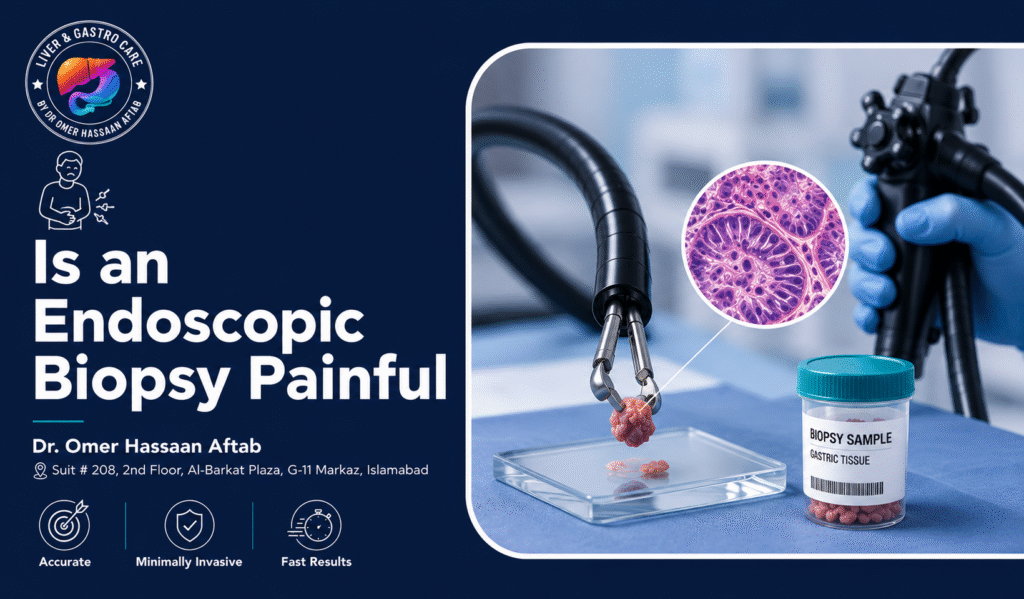
No, an endoscopic biopsy is not typically painful. The lining of the digestive tract has very few nerve endings that sense sharp pain so removing a tiny piece of tissue causes little to no sensation on its own. Most of what patients notice comes from the scope moving through the throat a temporary gag reflex or mild bloating from the air used to expand the tract for a clear view. Sedation reduces even that discomfort for the vast majority of patients.
This guide breaks down exactly what you can expect before during and after the test so nervousness about pain does not stop you from getting checked.
Table of Contents
- Why the Digestive Tract Feels Little Pain
- What You Might Feel During the Procedure
- Role of Sedation and Anesthesia
- Pain or Discomfort After the Procedure
- Sedated vs Unsedated Endoscopy
- Pain Experience in Children vs Adults
- Tips to Reduce Discomfort
- When Pain Is Not Normal
- FAQs
- Conclusion
Taking the tissue sample itself is painless because the mucosal lining lacks the nerve fibers needed to register that kind of touch. Any discomfort a patient feels usually comes from the endoscope itself rather than the biopsy forceps. Sedation is offered for almost every endoscopic biopsy which keeps the whole experience relaxed from start to finish.
Why the Digestive Tract Feels Little Pain
The inner lining of the esophagus stomach and intestines contains far fewer pain sensing nerve fibers than skin. That is why doctors can pinch a small sample of tissue without the patient feeling a cut or a pinch. The organs do respond to stretching and pressure though which explains sensations like fullness or bloating rather than sharp pain.
What You Might Feel During the Procedure
During a standard upper GI endoscopy most patients describe these sensations rather than pain:
- A brief gag reflex as the tube passes the back of the throat
- Pressure or fullness as air is used to open up the tract for viewing
- Mild bloating that settles once the air is released at the end
- A feeling of the tube moving but not cutting or stabbing
For a colonoscopy patients sometimes feel cramping similar to gas pain as the scope navigates turns in the colon. This usually passes within seconds.
Role of Sedation and Anesthesia
Sedation is the biggest factor in how comfortable the test feels. Depending on the clinic and the patient’s health three options are commonly offered.
- Conscious sedation – the patient stays relaxed and mildly drowsy but can still respond to instructions
- Deep sedation – the patient sleeps through the entire procedure and typically remembers nothing afterward
- Local anesthetic spray only – used for select patients undergoing a quick unsedated exam
Most clinics recommend at least light sedation for tissue sampling procedures since it keeps muscles relaxed and allows the doctor to work more precisely.
Pain or Discomfort After the Procedure
Once sedation wears off patients may notice:
- A scratchy or sore throat lasting a day or two after an upper endoscopy
- Mild abdominal cramping or bloating that fades within hours
- Slight drowsiness or grogginess for the rest of the day
- Rarely a small amount of blood in stool after a colon biopsy which should stop quickly
None of these should be described as real pain. Anything sharp persistent or worsening deserves a call to your doctor.
Sedated vs Unsedated Endoscopy
| Factor | Sedated Endoscopy | Unsedated Endoscopy |
|---|---|---|
| Comfort level | High minimal awareness of discomfort | Patient stays alert and may feel gagging |
| Recovery time | Thirty minutes to a few hours | Immediate normal activity resumes |
| Suitability | Most patients especially anxious ones | Healthy adults with high pain tolerance |
| Driving after test | Not allowed same day | Usually allowed |
| Best for | Longer procedures polyp removal biopsy | Quick diagnostic checks |
Patients unsure which option fits their situation can review gastroscopy versus colonoscopy differences to understand how preparation and sedation vary between the two tests.
Pain Experience in Children vs Adults
Children tend to receive deeper sedation or general anesthesia more often than adults since staying still is harder for them. Adults with high anxiety or a strong gag reflex are also frequently offered deeper sedation. Older adults with multiple health conditions may need lighter sedation with closer monitoring instead.
Tips to Reduce Discomfort
- Follow fasting instructions exactly so the procedure moves quickly
- Wear loose comfortable clothing on the day of the test
- Ask about throat numbing spray if you are having an unsedated exam
- Practice slow breathing during tube insertion to reduce gagging
- Arrange a ride home in advance so you are not rushed after sedation
Reading through instructions on how to prepare for a gastroscopy beforehand also helps reduce anxiety which itself can heighten the perception of discomfort.
When Pain Is Not Normal
Contact your doctor promptly if you notice any of the following after the test:
- Severe or worsening abdominal pain
- High fever or chills
- Heavy or persistent bleeding
- Difficulty breathing or chest pain
- Vomiting blood
These symptoms are rare but should never be ignored. Patients being monitored for reflux related changes sometimes ask whether ongoing GERD itself explains post procedure discomfort. In most cases any burning sensation afterward is temporary and unrelated to the underlying reflux condition.
Patients who are especially worried about discomfort but only need surface level monitoring rather than tissue sampling can also ask their doctor whether a capsule endoscopy is a suitable alternative for their specific case.
FAQs
Does taking the biopsy sample itself hurt?
No. The forceps clip a tiny piece of tissue from a lining with very few pain receptors so the sampling step itself is not felt.
Why does my throat hurt after the test?
The tube passing over the throat can cause mild irritation similar to a scratchy throat after a cold. It usually resolves within one to two days.
Can I request to be fully asleep during the procedure?
Yes most clinics offer deep sedation on request especially for patients with anxiety or a strong gag reflex.
Is a colonoscopy biopsy more painful than an upper endoscopy biopsy?
Neither is typically painful. Colonoscopy may cause brief cramping as the scope moves around bends in the colon but this is not the same as biopsy pain.
How soon can I eat after the procedure?
Most patients can eat a light meal once the numbing effect on the throat wears off usually within an hour or two.
Conclusion
Fear of pain should not be a reason to delay a test that can catch serious conditions early. An endoscopic biopsy involves brief pressure a possible gag reflex and mild post procedure bloating rather than real pain and sedation manages even those minor sensations well. If ongoing digestive symptoms have you considering this test speaking with experienced gastroenterologists in Islamabad is the best way to get clear answers about what your specific procedure will involve.