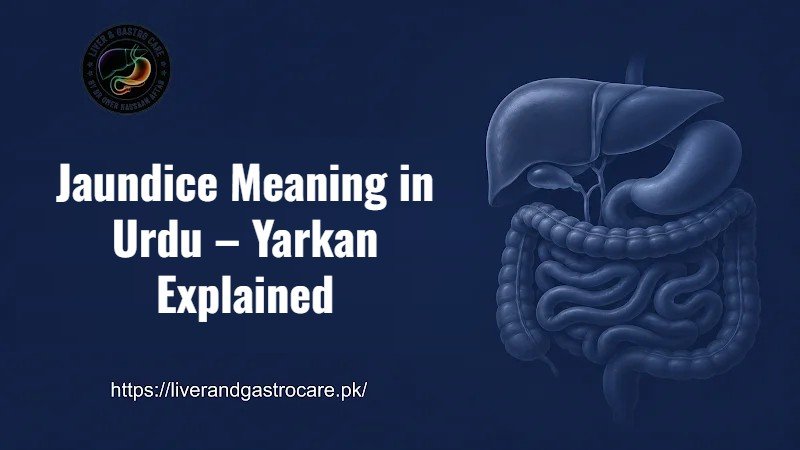
Jaundice meaning in Urdu is yarkan (یرقان), also called peeliya: yellowing of the eyes and skin caused by a build-up of bilirubin in the blood. Jaundice is not a disease by itself but a sign that something is affecting the liver, the bile ducts or the red blood cells. In Pakistan, people also say peela yarkan for jaundice and kala yarkan for hepatitis C (and sometimes hepatitis B), which are two very different conditions.
Key points
- Yarkan in English = jaundice; bilirubin in Urdu is often called “safra ka maddah”.
- Peela yarkan is the visible yellow colour; kala yarkan is the common name for hepatitis C, which often causes no yellowing at all.
- Common adult causes: hepatitis A and E, hepatitis B and C, gallstones blocking the bile duct, alcohol, medicines and, less often, cancer.
- Every adult with new jaundice needs blood tests and an ultrasound, not only home remedies.
Table of Contents
- Jaundice Meaning in Urdu and Related Terms
- Peela Yarkan vs Kala Yarkan
- What Is Bilirubin?
- Yarkan ki Alamat (Symptoms)
- Types and Causes of Jaundice
- Jaundice in Newborn Babies
- Tests for Jaundice
- What to Eat in Yarkan
- Common Myths in Pakistan
- When Jaundice Is an Emergency
- Frequently Asked Questions
Jaundice Meaning in Urdu and Related Terms
| English | Urdu | Roman Urdu |
|---|---|---|
| Jaundice | یرقان / پیلیا | Yarkan / peeliya |
| Yellow eyes | آنکھوں کا پیلا ہونا | Aankhon ka peela hona |
| Bilirubin | بلیروبن (صفرا کا مادہ) | Bilirubin |
| Liver | جگر | Jigar |
| Bile duct | پت کی نالی | Pitt ki nali |
| Hepatitis | جگر کی سوزش | Jigar ki sozish |
Peela Yarkan vs Kala Yarkan
These two terms cause a lot of confusion in Pakistan:
| Peela yarkan | Kala yarkan | |
|---|---|---|
| What it usually means | Visible jaundice (yellow eyes and skin) | Hepatitis C (sometimes used for hepatitis B) |
| Typical cause | Hepatitis A or E from contaminated food/water, gallstones, other liver injury | Blood-borne virus from unsafe injections, drips, dental work, razors, transfusions |
| Yellow colour? | Yes, by definition | Usually no; most people feel well for years |
| Course | Hepatitis A/E usually clears in weeks | Can silently damage the liver over 10–20 years |
| Treatment | Depends on cause | Hepatitis C is curable with 12-week antiviral tablets |
So a person can have kala yarkan without ever turning yellow. Read more about hepatitis in Urdu and hepatitis C treatment.
What Is Bilirubin?
Bilirubin is a yellow pigment made when old red blood cells are broken down. The liver processes it and sends it out in bile, which gives stool its brown colour. If too much bilirubin is made, the liver cannot process it, or bile cannot flow out, bilirubin rises in the blood and the eyes turn yellow.
- Normal total bilirubin in adults is roughly up to 1.0–1.2 mg/dL (labs vary slightly).
- Yellow eyes usually become visible when it rises above about 2.5–3 mg/dL.
- The lab report splits it into direct (conjugated) and indirect (unconjugated) bilirubin, which helps the doctor find the cause.
Yarkan ki Alamat (Symptoms)
- Yellow whites of the eyes, then yellow skin
- Dark yellow or tea-coloured urine
- Pale, clay-coloured stool (suggests blocked bile flow)
- Itching, especially with bile duct blockage
- Tiredness, poor appetite, nausea and vomiting
- Fever and right upper abdominal pain (in hepatitis or gallstone infection)
Types and Causes of Jaundice
| Type | Where the problem is | Common causes |
|---|---|---|
| Pre-hepatic | Before the liver: too many red cells breaking down | Haemolytic anaemia, thalassaemia, G6PD deficiency, malaria |
| Hepatic | In the liver cells | Hepatitis A, B, C, E; alcohol; fatty liver disease; certain medicines and herbal products; Gilbert’s syndrome |
| Post-hepatic (obstructive) | Bile ducts blocked | Gallstones in the bile duct, strictures, pancreatic or bile duct tumours |
Hepatitis A and E spread through contaminated water and food and are the most common causes of jaundice in children and young adults in Pakistan, especially in summer and the monsoon. Obstructive jaundice from gallstones is often treated with ERCP, which removes the stone from the bile duct without surgery. For a deeper look at causes, read what causes jaundice and when to worry.
Jaundice in Newborn Babies
Mild yellowing in the first week of life is common and usually harmless, because a baby’s liver is still maturing. It needs attention if it appears in the first 24 hours, spreads to the legs, the baby feeds poorly or is very sleepy, or it lasts beyond two weeks. Treatment is often phototherapy (light treatment) in hospital. Newborn jaundice is managed by a paediatrician.
Tests for Jaundice
- Liver function tests (LFTs): bilirubin, ALT (SGPT), AST, alkaline phosphatase, albumin. See our guide to the SGPT test.
- Viral markers: HAV IgM, HEV IgM, HBsAg, anti-HCV.
- Complete blood count and tests for haemolysis.
- Ultrasound abdomen to see whether the bile ducts are dilated or there are gallstones.
- MRCP, CT or endoscopic ultrasound if a blockage is suspected.
What to Eat in Yarkan
No food cures jaundice, but the right diet supports recovery while the cause is treated:
- Plenty of clean, boiled or filtered water and fluids (ORS if vomiting)
- Small, frequent, light meals: khichdi, boiled rice, daal, roti, boiled vegetables, fruit
- Normal protein (eggs, chicken, daal) unless your doctor advises otherwise
- Avoid fried and very oily food while nausea lasts
- No alcohol, and no unnecessary medicines or herbal “jigar tonics”
Sugarcane juice, radish leaves or glucose water are popular, but they do not treat the cause. Make sure any juice is fresh and hygienically prepared, because contaminated street juice can itself spread hepatitis A and E.
Common Myths in Pakistan
- “Jaundice is cured by jhaar-phoonk or a string around the neck.” These do not affect bilirubin. Many patients lose valuable time this way.
- “Eat only boiled food without salt or turmeric.” Very restrictive diets weaken patients. Light, normal home food is fine.
- “Yellow eyes are always hepatitis.” Gallstones, blood disorders and, in older adults, tumours can also cause jaundice, so scanning matters.
- “Kala yarkan cannot be cured.” Hepatitis C is now curable in most people with 12 weeks of tablets.
When Jaundice Is an Emergency
Go to a hospital immediately if jaundice comes with confusion or excessive sleepiness, vomiting blood or black stools, a swollen abdomen, very high fever with shivering, severe abdominal pain, or in pregnancy. These can signal acute liver failure, cholangitis (bile duct infection) or bleeding.
For any adult with new yellow eyes, see a liver specialist within days. Dr. Omer Hassaan Aftab Ahmad, gastroenterologist and hepatologist, evaluates and treats jaundice at G-8 Markaz, Islamabad, including ERCP for blocked bile ducts. Visit our jaundice treatment page to learn more.
Urdu Mein Khulasa
یرقان کو انگریزی میں جانڈس کہتے ہیں۔ اس میں خون میں بلیروبن بڑھنے سے آنکھیں اور جلد پیلی ہو جاتی ہیں اور پیشاب کا رنگ گہرا ہو جاتا ہے۔ پیلا یرقان عام طور پر ہیپاٹائٹس اے یا ای یا پتے کی پتھری کی وجہ سے ہوتا ہے، جبکہ کالا یرقان ہیپاٹائٹس سی کو کہا جاتا ہے جس میں اکثر رنگ پیلا نہیں ہوتا۔ یرقان کی صورت میں جگر کے ٹیسٹ اور الٹراساؤنڈ ضروری ہیں۔ دیسی ٹوٹکوں پر وقت ضائع نہ کریں اور جگر کے ماہر ڈاکٹر سے رجوع کریں۔
Frequently Asked Questions
What is yarkan called in English?
Yarkan (یرقان) is called jaundice in English. It means yellowing of the eyes and skin due to raised bilirubin.
What is kala yarkan in English?
Kala yarkan is the common Pakistani name for hepatitis C, and sometimes hepatitis B. It is a viral liver infection, and it often causes no yellowing at all.
Is jaundice contagious?
Jaundice itself is not, but some causes are. Hepatitis A and E spread through contaminated food and water, while hepatitis B and C spread through blood and body fluids.
How long does jaundice take to go away?
Jaundice from hepatitis A or E usually settles within 2–6 weeks. Jaundice from a blocked bile duct improves only after the blockage is removed, and other causes vary.
What bilirubin level is dangerous?
There is no single number for adults; the cause and how unwell the person is matter more. Any adult with visible jaundice needs evaluation, and very high or rapidly rising levels need urgent care.
Which doctor should I see for yarkan?
A gastroenterologist or hepatologist (liver specialist). Newborn jaundice is treated by a paediatrician.
Conclusion
Jaundice, or yarkan, is a warning sign from the liver, bile ducts or blood, not a disease to be treated with home remedies alone. Knowing the difference between peela and kala yarkan helps patients seek the right tests early. If you or a family member has yellow eyes, dark urine or known hepatitis, consult Dr. Omer Hassaan Aftab Ahmad in Islamabad on 0336 5993116.


