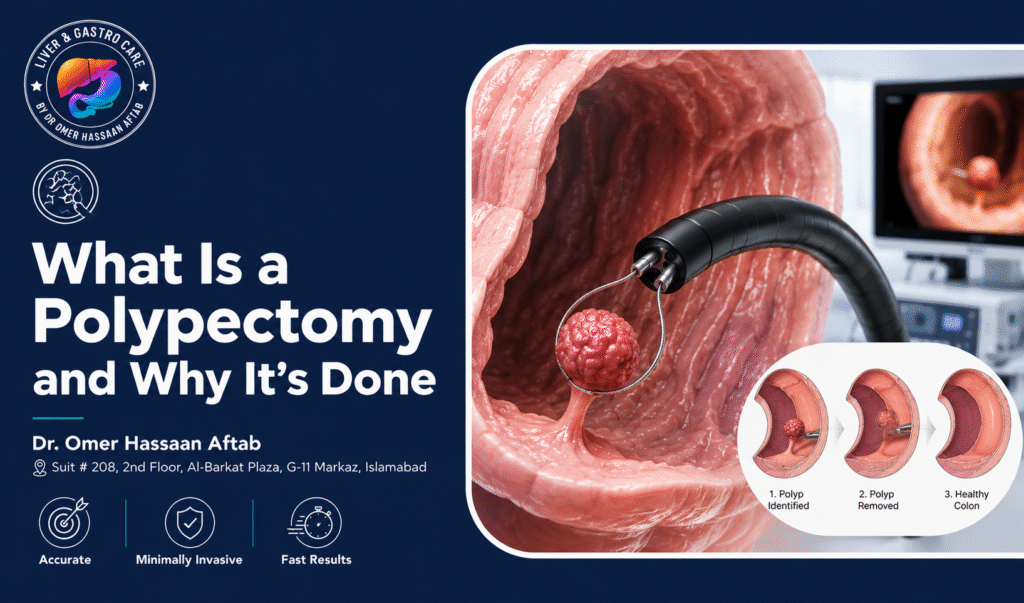
A polypectomy is the removal of a polyp, a small growth on the lining of the bowel or stomach, usually during a colonoscopy or endoscopy. It is done because some polyps (adenomas and serrated polyps) can turn into cancer over years; removing them prevents colorectal cancer and allows the lab to examine them. Polypectomy is not major surgery: there are no cuts on the skin, it is usually painless under sedation, and most people go home the same day.
Key points
- Most polyps are removed during the same colonoscopy in which they are found.
- Techniques: cold snare, hot snare, forceps and endoscopic mucosal resection (EMR) for large polyps.
- Bleeding and perforation are uncommon; risk rises with larger polyps.
- Results guide when your next colonoscopy is needed.
Table of Contents
- Why Polypectomy Is Done
- Polypectomy Techniques
- What Happens During the Procedure
- Is Polypectomy Major Surgery?
- Risks
- Recovery and Diet
- Results and Follow-Up
- Frequently Asked Questions
Why Polypectomy Is Done
- Cancer prevention: most colorectal cancers develop from polyps
- Diagnosis: the polyp type and any dysplasia can only be known after removal and lab testing
- Symptom relief: larger polyps can bleed and cause anaemia
Read are colon polyps cancerous to understand the risk.
Polypectomy Techniques
| Technique | Used for |
|---|---|
| Cold forceps | Tiny polyps (1–3 mm) |
| Cold snare | Small polyps up to about 10 mm; low bleeding risk |
| Hot snare (electrocautery) | Larger or stalked polyps |
| Endoscopic mucosal resection (EMR) | Large flat polyps, lifted with a fluid injection first |
| Endoscopic submucosal dissection (ESD) | Selected large lesions in expert centres |
Clips may be placed to close the site and reduce bleeding.
What Happens During the Procedure
- Bowel preparation and sedation as for a colonoscopy; see colonoscopy prep.
- The polyp is inspected and its size and surface assessed.
- It is removed with the chosen technique and retrieved for the lab.
- The site may be tattooed for future identification if large or suspicious.
Is Polypectomy Major Surgery?
No. It is an endoscopic procedure with no incisions. Small polyp removal adds only minutes to a colonoscopy. Very large or suspected cancerous polyps may need a longer procedure, an overnight stay or, rarely, surgery.
Risks
- Bleeding: immediate or delayed up to 2 weeks; uncommon and usually treatable endoscopically
- Perforation: rare; more likely after large polyp removal
- Post-polypectomy syndrome: pain and fever from burn injury to the bowel wall; usually settles with treatment
Seek urgent care for heavy bleeding, severe abdominal pain, fever or a hard swollen belly.
Recovery and Diet
- Bloating and mild cramps for a few hours are normal
- Light, low-fibre meals on the day; normal diet the next day unless advised
- Avoid alcohol for 24 hours
- After large polyp removal: avoid heavy lifting for a few days; follow instructions on blood thinners and NSAIDs
- No driving for 24 hours after sedation
Results and Follow-Up
Pathology results usually take 5–7 days. The type, size and number of polyps determine your next colonoscopy, typically 3–10 years later, or sooner after piecemeal removal of a large polyp. See what happens if a polyp is found.
Dr. Omer Hassaan Aftab Ahmad performs colonoscopy with polypectomy at G-8 Markaz, Islamabad. See our polypectomy page.
Urdu Mein Khulasa
پولیپیکٹومی میں آنت یا معدے کے پولپ کو کولونوسکوپی یا اینڈوسکوپی کے دوران نکال دیا جاتا ہے۔ یہ کینسر سے بچاؤ کے لیے کیا جاتا ہے کیونکہ کچھ پولپ سالوں بعد کینسر بن سکتے ہیں۔ یہ بڑا آپریشن نہیں، جلد پر کوئی کٹ نہیں لگتا اور مریض اسی دن گھر چلا جاتا ہے۔ کبھی کبھار خون آنا ممکن ہے، زیادہ خون، شدید درد یا بخار ہو تو فوراً رابطہ کریں۔
Frequently Asked Questions
Is polypectomy a major surgery?
No. It is an endoscopic procedure without incisions, usually done during a routine colonoscopy.
How serious is a polypectomy?
It is generally safe. Bleeding and perforation are uncommon and more likely after removal of large polyps.
How long does it take to recover from large polyp removal?
Most people recover within a day or two; avoid heavy lifting and follow medicine instructions for about a week.
What should I eat after a polypectomy?
Light, low-fibre food on the first day, then your normal diet unless your doctor advises otherwise.
Can polyps grow back after removal?
A completely removed polyp rarely recurs, but new polyps can form, so follow-up colonoscopy is important.
Conclusion
Polypectomy is a simple, effective step that prevents colorectal cancer. For colonoscopy and polyp removal in Islamabad, consult Dr. Omer Hassaan Aftab Ahmad on 0336 5993116.


