Endoscopic ultrasound diagnoses a wide range of conditions affecting the digestive tract and the organs sitting close to it, including the pancreas, bile duct, liver, gallbladder and lymph nodes. It combines a thin flexible endoscope with a small ultrasound probe, allowing the doctor to view the layers of the gut wall and nearby organs in far greater detail than a standard scan or a regular endoscopy can offer. This makes it one of the most precise tools for detecting tumors, cysts, inflammation and unexplained masses at an early stage.
Table of Contents
- What Is Endoscopic Ultrasound
- How the Procedure Works
- Conditions Endoscopic Ultrasound Can Diagnose
- EUS Guided Biopsy and Fine Needle Aspiration
- Upper Versus Lower Endoscopic Ultrasound
- When Your Doctor May Recommend EUS
- Preparing for the Procedure
- What Happens After the Procedure
- Accuracy Compared to Other Imaging Tests
- Frequently Asked Questions
- Conclusion
What Is Endoscopic Ultrasound
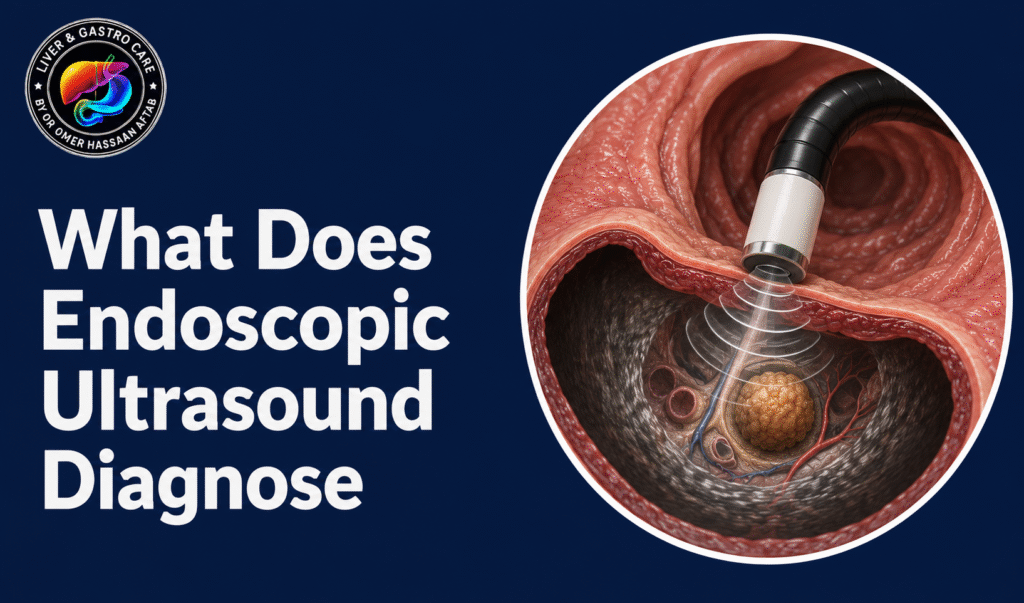
Endoscopic ultrasound, often called EUS, is a diagnostic procedure that combines endoscopy and ultrasound in a single device. A thin tube fitted with a small ultrasound transducer is passed through the mouth or, less commonly, through the rectum, depending on the area being examined. Because the probe sits directly next to the tissue being studied rather than scanning through skin and muscle, it produces sharper and more detailed images than a standard abdominal ultrasound, CT scan or MRI.
How the Procedure Works
During the procedure, the endoscope is guided to the target area under sedation, and sound waves are sent out and captured as they bounce back from nearby tissues. The device converts these signals into real time images that show the exact depth, size and layer involvement of any abnormality. This level of detail is especially useful for evaluating how deep a tumor extends into the wall of the esophagus, stomach or bowel, which plays a major role in cancer staging.
Conditions Endoscopic Ultrasound Can Diagnose
Endoscopic ultrasound is used to evaluate and diagnose a broad set of conditions across the digestive system and surrounding organs.
| Organ or Area | Conditions Diagnosed |
|---|---|
| Pancreas | Pancreatic cancer, pancreatic cysts, chronic pancreatitis |
| Bile duct and gallbladder | Bile duct stones, strictures, gallbladder inflammation |
| Esophagus | Tumor depth and staging, submucosal masses |
| Stomach | Gastric wall thickening, submucosal tumors, ulcers |
| Liver | Suspicious lesions, staging of nearby cancer spread |
| Lymph nodes | Enlarged or abnormal nodes linked to cancer spread |
| Lungs and mediastinum | Mediastinal masses, lymph node evaluation near the chest |
Beyond structural evaluation, the procedure is frequently used to investigate unexplained abdominal pain, assess a mass first seen on a scan such as CT or MRI, and determine whether a tumor has spread beyond its original location. It also plays a role in evaluating swallowing disorders that stem from a narrowing linked to conditions such as an esophageal cancer, and it can help clarify the extent of disease in patients already being managed for a stomach cancer.
EUS Guided Biopsy and Fine Needle Aspiration
One of the biggest advantages of endoscopic ultrasound is that it allows the doctor to take a tissue sample from a suspicious area during the same session, using a thin needle guided by real time imaging. This process, called fine needle aspiration, avoids the need for a separate surgical biopsy in many cases. It is particularly valuable for sampling tissue from the pancreas, liver and lymph nodes that would otherwise be difficult to reach safely. The collected sample is then examined under a microscope to confirm whether the tissue is cancerous, inflammatory or benign.
Upper Versus Lower Endoscopic Ultrasound
The approach used depends on which part of the digestive tract needs to be examined.
- Upper EUS examines the esophagus, stomach, duodenum, pancreas, bile duct and surrounding structures, and the scope is passed through the mouth in a manner similar to a standard gastroscopy
- Lower EUS examines the colon, rectum and nearby lymph nodes, with the scope passed through the rectum in a similar approach to a colonoscopy
Both approaches are typically completed within thirty to sixty minutes and are performed on an outpatient basis.
When Your Doctor May Recommend EUS
A gastroenterologist may recommend endoscopic ultrasound in several situations, such as:
- A mass, cyst or lesion was spotted on a previous CT scan or MRI and needs closer evaluation
- Unexplained abdominal or chest pain with no clear cause on standard imaging
- Suspected pancreatitis, pancreatic cysts or pancreatic cancer
- Staging of esophageal, stomach, pancreatic or rectal cancer before treatment planning
- Evaluation of bile duct stones or strictures, sometimes alongside an ERCP procedure
- Investigation of persistent gi bleeding with no source identified on a regular endoscopy
Preparing for the Procedure
Preparation for EUS is similar to other endoscopic procedures and generally includes the following steps.
- Fasting for six to eight hours before an upper EUS
- Following bowel preparation instructions if a lower EUS is planned
- Informing the doctor about blood thinners or other regular medications
- Arranging transport home since sedation is used during the procedure
- Discussing any allergies or previous reactions to sedation
What Happens After the Procedure
Most patients recover within an hour or two once the sedation wears off, and normal activities can usually resume the same day or the following morning. A mild sore throat, bloating or slight discomfort at the biopsy site is common and settles on its own. If a fine needle aspiration was performed, results are typically available within a few days, and the gastroenterologist will discuss the next steps based on the findings, which may include additional imaging, treatment planning or a follow up visit involving an endoscopic biopsy if further tissue evaluation is needed.
Accuracy Compared to Other Imaging Tests
Endoscopic ultrasound offers a level of detail that many other imaging methods cannot match, particularly for small lesions close to the digestive tract wall. While CT scans and MRIs are effective for detecting larger masses and distant spread, they are less precise when it comes to identifying how many layers of tissue are involved or whether a small pancreatic cyst is a cause for concern. Because the ultrasound probe sits directly beside the target tissue, EUS often catches abnormalities that other scans miss entirely, making it a valuable next step when results from other imaging are inconclusive.
FAQs
What does endoscopic ultrasound diagnose?
Endoscopic ultrasound diagnoses conditions of the pancreas, bile duct, gallbladder, esophagus, stomach, liver and nearby lymph nodes, including cancers, cysts, inflammation, strictures and unexplained masses that other scans may not clearly show. It is also used to determine how deep a tumor has grown into the wall of an organ, which helps guide treatment decisions.
Is endoscopic ultrasound painful?
The procedure is performed under sedation, so most patients do not feel pain during the exam. A mild sore throat or slight bloating can occur afterward, and these symptoms usually resolve within a day without any specific treatment.
How accurate is endoscopic ultrasound for detecting pancreatic cancer?
Endoscopic ultrasound is considered one of the most sensitive tests available for detecting small pancreatic tumors and cysts, often identifying abnormalities that are missed on CT or MRI scans, and it allows a tissue sample to be taken in the same session to confirm the diagnosis.
How long does an EUS procedure take?
Most endoscopic ultrasound procedures are completed within thirty minutes to an hour, depending on whether a biopsy is performed and how many areas need to be examined.
Do I need to be put to sleep for an EUS?
Yes, sedation is used for comfort and to keep the patient relaxed during the procedure, so you will need someone to drive you home afterward since it is not safe to operate a vehicle the same day.
When should I consult a gastroenterologist about a possible pancreatic or bile duct problem?
You should see a gastroenterologist if you experience persistent upper abdominal pain, unexplained weight loss, yellowing of the skin or eyes, or if a previous scan showed an unclear mass or cyst near the pancreas or bile duct, since these signs may require closer evaluation with endoscopic ultrasound.
Can endoscopic ultrasound detect cancer that has spread to lymph nodes?
Yes, endoscopic ultrasound can identify enlarged or abnormal lymph nodes near the digestive tract and, when needed, a fine needle aspiration can be performed on the same visit to confirm whether cancer cells are present.
Conclusion
Endoscopic ultrasound has become one of the most reliable tools for identifying and confirming conditions that are difficult to detect with standard imaging alone, from small pancreatic cysts and bile duct strictures to submucosal tumors and enlarged lymph nodes near the digestive tract. Its ability to combine detailed imaging with same session tissue sampling means many patients receive a clear diagnosis without needing a separate surgical procedure, which shortens the path to appropriate treatment and reduces unnecessary anxiety while waiting for answers. Because the accuracy of this test depends heavily on the skill and experience of the person performing it, choosing a specialist who regularly carries out endoscopic ultrasound procedures makes a real difference in how early and how precisely a problem is caught. If you have been dealing with unexplained abdominal pain, an unclear finding on a previous scan, or symptoms that point toward the pancreas, bile duct or digestive tract, consulting an experienced gastroenterologist in Islamabad can help you get a timely and accurate diagnosis before the condition progresses further.