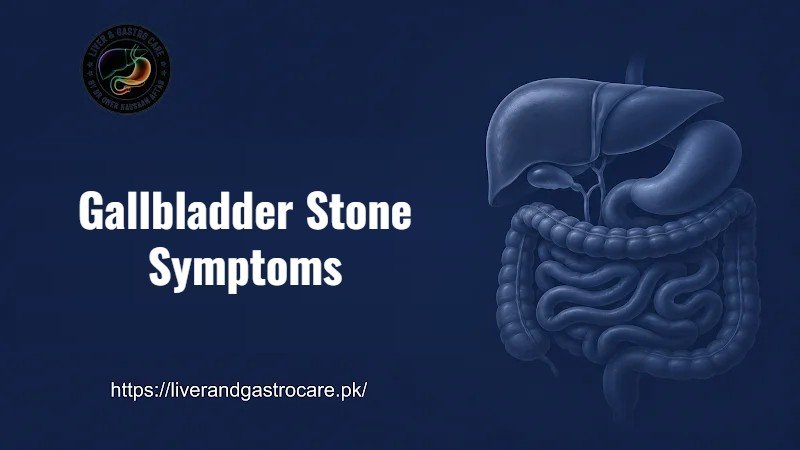
The classic gallbladder stone symptom is a gallbladder attack (biliary colic): sudden, steady pain in the upper right or upper middle abdomen that lasts from 30 minutes to several hours, often after a fatty meal or at night, sometimes spreading to the right shoulder blade or back, with nausea or vomiting. Most people with gallstones never have symptoms. Fever, yellow eyes, dark urine or pain lasting more than 6 hours suggest a complication and need urgent care.
Key points
- Gallstones (pitte ki pathri) are common, especially in women, after 40, with obesity and after rapid weight loss.
- Silent stones usually need no treatment; painful stones usually need gallbladder removal.
- Stones that slip into the bile duct can cause jaundice or pancreatitis and are removed by ERCP.
- Ultrasound is the main test.
Table of Contents
- First Signs of Gallbladder Stones
- 10 Symptoms of a Gallbladder Attack
- Signs of Complications
- Do Gallstones Cause Gas and Indigestion?
- Who Gets Gallstones?
- Tests
- Treatment
- Diet and Prevention
- Frequently Asked Questions
First Signs of Gallbladder Stones
The first sign is usually an attack of pain under the right ribs or in the upper middle stomach, often hours after a heavy, oily meal (for example after a dawat). The pain builds over minutes, stays constant rather than coming in waves, and settles after 1–5 hours. Between attacks, people often feel completely well.
10 Symptoms of a Gallbladder Attack
- Sudden pain in the upper right abdomen
- Pain in the upper middle abdomen, below the breastbone
- Pain spreading to the right shoulder blade or back
- Pain lasting 30 minutes to several hours
- Pain after fatty or large meals, or waking you at night
- Nausea
- Vomiting
- Restlessness: difficulty finding a comfortable position
- Sweating
- Tenderness under the right ribs
Signs of Complications
| Complication | Signs |
|---|---|
| Acute cholecystitis (inflamed gallbladder) | Pain lasting more than 6 hours, fever, tenderness |
| Stone in the bile duct (choledocholithiasis) | Yellow eyes, dark urine, pale stools, itching |
| Cholangitis (bile duct infection) | Fever with chills, jaundice and pain: an emergency |
| Gallstone pancreatitis | Severe upper abdominal pain going through to the back, vomiting |
See jaundice meaning in Urdu and lablaba (pancreas) for related information.
Do Gallstones Cause Gas and Indigestion?
Bloating, burping and indigestion are common but not specific to gallstones; they are more often due to gastritis, reflux, H. pylori or IBS. Removing the gallbladder relieves attacks of pain but may not cure vague gas or indigestion. That is why the symptom pattern matters before deciding on surgery.
Who Gets Gallstones?
- Women, especially in their reproductive years and with multiple pregnancies
- Age over 40
- Obesity, and rapid weight loss (crash diets, after bariatric surgery)
- Diabetes and high triglycerides
- Family history
- Blood disorders such as thalassaemia (pigment stones)
- Long fasting periods and very low-fibre diets
Tests
- Abdominal ultrasound: the main test for gallstones
- Liver function tests and blood count: for bile duct blockage and infection
- Amylase/lipase: if pancreatitis is suspected
- MRCP or endoscopic ultrasound (EUS): to look for stones in the bile duct
Treatment
- Silent stones: usually observation
- Painful stones: laparoscopic cholecystectomy (keyhole gallbladder removal) by a surgeon
- Bile duct stones: removed by ERCP without open surgery, followed by gallbladder removal
- Pain relief during an attack, and antibiotics for infection
Dissolving medicines work only for small cholesterol stones in selected patients and take months. Herbal “pathri tor” remedies do not dissolve gallstones.
Dr. Omer Hassaan Aftab Ahmad evaluates gallstone symptoms and performs ERCP for bile duct stones at G-8 Markaz, Islamabad. See our gallstones treatment page.
Diet and Prevention
- Avoid very large, fatty meals during symptomatic periods
- Lose weight gradually (0.5–1 kg a week), not with crash diets
- Eat fibre-rich foods: vegetables, fruit, daal, whole grains
- Use healthy oils in moderate amounts
- Stay active
Urdu Mein Khulasa
پتے کی پتھری کی سب سے عام علامت پیٹ کے دائیں اوپر یا درمیان میں اچانک شدید درد ہے جو اکثر چکنا کھانا کھانے کے بعد یا رات کو ہوتا ہے، دائیں کندھے یا کمر تک جاتا ہے اور متلی یا الٹی کے ساتھ ہوتا ہے۔ بہت سے لوگوں میں پتھری کوئی علامت نہیں کرتی۔ بخار، آنکھیں پیلی ہونا یا چھ گھنٹے سے زیادہ درد پیچیدگی کی علامت ہے۔ الٹراساؤنڈ سے تشخیص ہوتی ہے۔ تکلیف دینے والی پتھری میں پتہ نکالنا پڑتا ہے اور نالی کی پتھری ای آر سی پی سے نکالی جاتی ہے۔
Frequently Asked Questions
What are the first signs of bad gallstones?
Attacks of steady upper right abdominal pain after meals, especially fatty ones, lasting 30 minutes to a few hours, often with nausea.
Is having gallstones serious?
Silent gallstones are usually harmless. Painful stones can lead to infection, jaundice or pancreatitis and are usually treated.
Where is gallbladder pain felt?
Under the right ribs or in the upper middle abdomen, often spreading to the right shoulder blade or back.
Can gallstones go away on their own?
Rarely. Small stones may pass, sometimes causing complications on the way. Most stones stay unless treated.
Can I live without a gallbladder?
Yes. Most people digest normally after gallbladder removal; some notice looser stools after fatty meals for a while.
Conclusion
Gallbladder stone symptoms follow a recognisable pattern, and knowing the warning signs of complications can prevent emergencies. For assessment of gallstones and bile duct stones in Islamabad, consult Dr. Omer Hassaan Aftab Ahmad on 0336 5993116.